

Quilt
Wholesale Quilt Manufacturer & Bulk Exporter in Pakistan
Uzair Textile manufactures and exports wholesale quilts, bedspreads, and coverlets from our production facility in Faisalabad, Pakistan — one of the country's largest textile hubs. We work directly with retail chains, hotel groups, and e-commerce brands that need consistent quality at factory-direct pricing, without going through a trading middleman.
Because we control the full process in-house — from yarn sourcing and weaving to quilting, finishing, and packing — we can hold tighter quality control than manufacturers who outsource parts of production, and we can quote directly without markup layers.
Certifications: ISO 9001:2015 (Quality Management), OEKO-TEX® Standard 100 (chemical safety), and SA8000 / SAI (ethical labor practices). Certificates are available on request for buyer audits and compliance files.
Production Capacity
Daily output: 4,500+ finished quilts
Quilting method: automated multi-needle machines for channel stitching, diamond patterns, and custom stitch layouts
Fabric production: in-house weaving on AirJet and Sulzer wide-width looms, thread counts from T-128 to T-300
Lead time:21 Days, depending on order volume and design patterns
Minimum order quantity (MOQ): state your actual MOQ — e.g. 50 pcs per design/color
Samples: available before bulk order confirmation — [state your sample cost/lead time policy]
Fabric & Fill Options
By fabric blend:
100% Cotton — breathable and soft, suited to premium retail and home decor lines
Poly-Cotton (52:48 and 65:35) — durable and quick-drying, commonly used for hotel and institutional laundry programs
CVC (Chief Value Cotton) — cotton-faced comfort with a polyester core for shape retention over repeated washing
By finish and design:
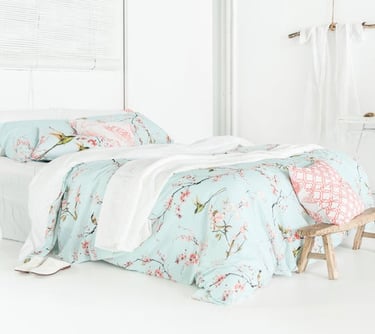
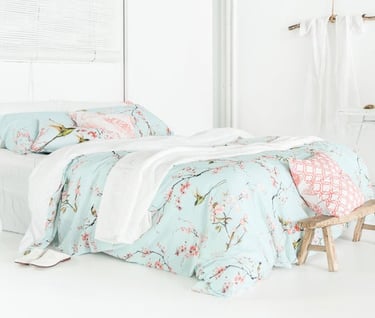
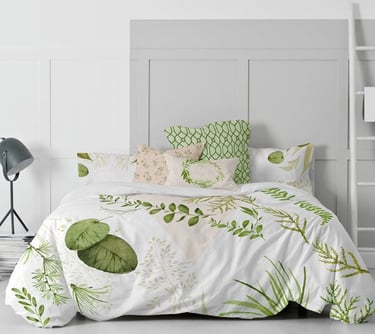
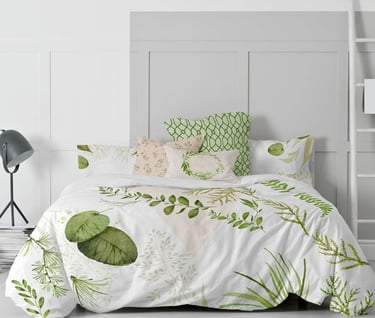
Printed quilts — rotary or pigment printing for contemporary or traditional patterns
Solid, vat-dyed colors — tested for colorfastness under repeated washing and friction
Embroidered designs — multi-needle embroidery and detailed borders, used mainly for bridal and boutique lines
Reversible/double-sided — two finishes in one quilt, giving retail buyers two SKUs from one product
Who We Work With
We supply department store buyers, hospitality groups sourcing institutional bedding, and e-commerce brands placing private-label or white-label orders. Private labeling and custom packaging are available on bulk orders.
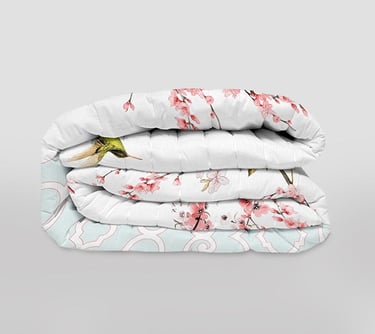
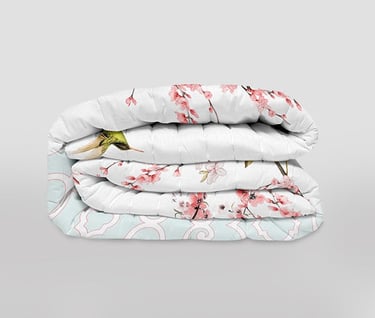
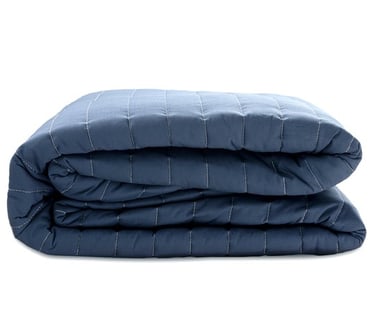
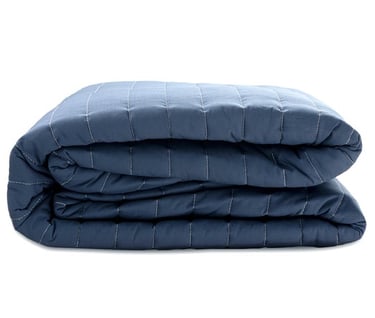
Stitching & Fill Construction
Stitch patterns: Box-stitch, wave-stitch, and linear channel-stitch, chosen based on how the insulation needs to sit and how much fiber migration resistance the end use requires.
Fill options: Carded polyester microfiber (hypoallergenic, lightweight), 100% cotton fill, and wool-blend fill, depending on the hand-feel and warmth the buyer wants.
Edge finishing: Self-fabric bias binding or double-needle hems on all edges to prevent fraying and unraveled seams over repeated washing.
Matching accessories: We can also produce matching pillow shams, quilted cushion covers, and fabric carry pouches, so buyers can offer a complete bedding set rather than the quilt alone.
Packaging & Export Logistics
We handle packaging and logistics through to your port or fulfillment warehouse:
Retail-ready packaging: Clear PVC zipper packs with wire framing, fabric carry totes, or printed paperboard bands with barcodes and branding, depending on how the product will be displayed at retail.
Bulk export packaging: For container orders, quilts are compressed into moisture-barrier poly sleeves and packed into export bales, which reduces shipping volume and lowers freight cost per unit.
Getting started: Contact our export desk for physical fabric swatches, our pattern catalog, and a factory-direct quote.
Frequently Asked Questions
What is the minimum order quantity for wholesale quilts? We can make 50 Piece per color or design, quilted pattern.
Do you provide samples before a bulk order? Yes We provide free samples only pay DHL charges 49$ for one Kgs
What is the typical lead time for a container order? We lead time is very short as compared to our competitors, we complete your first 40 ft container in 21 Days ony.
What's the difference between a quilt and a comforter? A comforter uses a thick, high-loft loose fill (roughly 200–350+ GSM) with widely spaced box stitching, so it stays fluffy. A quilt uses a flatter, denser fill layer stitched across the entire surface in tight geometric or channel patterns, which gives it a heavier, low-profile drape rather than a puffy look. Buyers usually choose quilts when they want a flatter finished product for retail folding and display, or a heavier hand-feel for hospitality use.
Why source directly from a Pakistan-based manufacturer instead of a trading agent? Sourcing direct means one less markup layer between you and the factory floor. Because we handle yarn spinning, weaving, and stitching in-house rather than subcontracting stages out, we can hold consistent fabric weight and stitch quality across a full container order, and quote you factory-direct pricing.
Which fill is best for hotel and hospitality bedding programs? For properties doing frequent commercial laundering, we typically recommend thermal-bonded polyester microfiber fill over natural cotton or wool fills. It holds its loft better, dries faster in industrial dryers, and distributes more evenly through repeated high-temperature wash cycles.
Can you produce custom private-label designs or embroidery? Yes. Our stitching floor runs automated multi-head embroidery and quilting equipment that can reproduce custom patterns, corporate logos, or bespoke borders. Send us your design in a standard vector file and we'll produce a physical strike-off sample for your approval before bulk production.
How do you keep the fill from shifting or clumping inside the quilt? We pair carded fiber webs with dense, computer-guided stitch patterns — locked box-stitches or narrow channel-stitches — so the needle line runs through the top fabric, fill layer, and backing at short, regular intervals. That locks the fill into individual chambers so it can't migrate or bunch during washing.
Which fabric blend shrinks least after repeated washing? For quilts that will see heavy commercial laundering, poly-cotton blends (65:35 or 52:48) or CVC hold their shape better than 100% cotton, since the polyester content adds dimensional stability and keeps borders from puckering.
How are the edges finished so they don't fray? We bind raw edges with a continuous bias-bound fabric strip secured with double-needle locked stitching, which protects against friction wear and gives a clean, finished look for retail shelf or commercial use.
Are your dyes and print chemicals safe for international retail? Yes — every batch is processed with low-impact, non-toxic reactive dyes and print binders that meet OEKO-TEX® Standard 100 requirements, and our finished fabric is certified free of heavy metals, formaldehyde, aromatic amines, and other skin-irritating processing chemicals.
How do you pack bulk orders to save on container freight? We offer industrial vacuum compression packaging — quilts are sealed in heavy-duty sleeves and compressed into flat, dense blocks before palletizing. This can cut volumetric shipping size by up to 60%, which lowers your per-unit freight cost on large orders.
Which certifications does Uzair Textile hold? ISO 9001:2015, OEKO-TEX® Standard 100, ethical manufacturing certification. Certificates are available on request for buyer compliance audits.
Request a quote or sample: Email our commercial contract desk at info@uzairtextile.com or call +92 345 7778794. Include your target dimensions, fabric preference, fill weight (GSM), and estimated order volume so we can put together a factory-direct quotation.
GOVERNMENT TENDER EXPERIENCE
Uzair Textile has built a track record of supplying quilts and bedding to government procurement programs across multiple countries, including Saudi Arabia (KSA), Russia, and South Africa. This experience sits apart from our commercial and retail work: government and institutional tenders come with a different set of demands — strict compliance documentation, fixed delivery windows, uniform quality across enormous order volumes, and full traceability from raw material to finished product. Meeting those requirements consistently, across different countries and regulatory environments, has shaped how we run our production floor.
What Government Contracts Require — and What We've Learned
Public-sector and institutional buyers don't evaluate suppliers the way a retail buyer does. Tenders typically specify exact technical parameters: fill weight (GSM), thread count, fabric composition, stitching pattern, and sometimes even packaging and labeling formats, all laid out in a technical specification document that becomes part of the contract. There's little room for interpretation or "close enough" — a batch that doesn't match spec can be rejected outright, and repeated non-compliance can affect a supplier's standing for future tenders.
Fulfilling contracts in Saudi Arabia, Russia, and South Africa has meant adapting to different climate requirements (heavier fill for colder markets, lighter breathable options for warmer ones), different documentation and customs standards, and different quality inspection protocols specific to each country's procurement authority. That range of experience is part of why we can move confidently into a new institutional tender: we've already built the internal systems — batch tracking, quality checkpoints, compliance paperwork — that large-scale government orders require.
Why This Matters for New Buyers
For a procurement officer or sourcing agent evaluating a new supplier, tender history is one of the strongest signals of reliability. It shows a manufacturer can:
Produce at volume and consistency government contracts demand
Meet fixed delivery deadlines without compromising quality
Pass compliance and documentation review required for public contracts
Adapt production specifications to different regulatory and climate requirements across markets
This is different from advertising claims alone — completing a government tender means passing an evaluation process set by the buyer, not a marketing statement. It's a track record that's been checked by someone else first.
What We Bring to Your Tender
If you're evaluating suppliers for a government or institutional bedding tender, we can provide the documentation history procurement teams typically request: quality certifications (ISO 9001:2015, OEKO-TEX® Standard 100), production capacity details, and references from prior contracts, subject to any confidentiality terms of those agreements. We're set up to handle the compliance paperwork, sample approval process, and delivery scheduling that institutional buyers require, based on what we've already done in similar tenders elsewhere.
Pro Tip for your tender page: Add a small table below this with Country | Year | Product | Approx. Volume - even general figures like "2019-2023, 500,000+ units" will double your credibility instantly.
Our Mission
Exceptional textile products at competitive prices, designed to meet your unique needs with unmatched quality and reliability. Our commitment to excellence ensures every piece reflects superior craftsmanship and timeless appeal.
CONTACT
Email address info@uzairtextile.com
Phone Number +92 345 7778794
© 2004. All rights reserved.