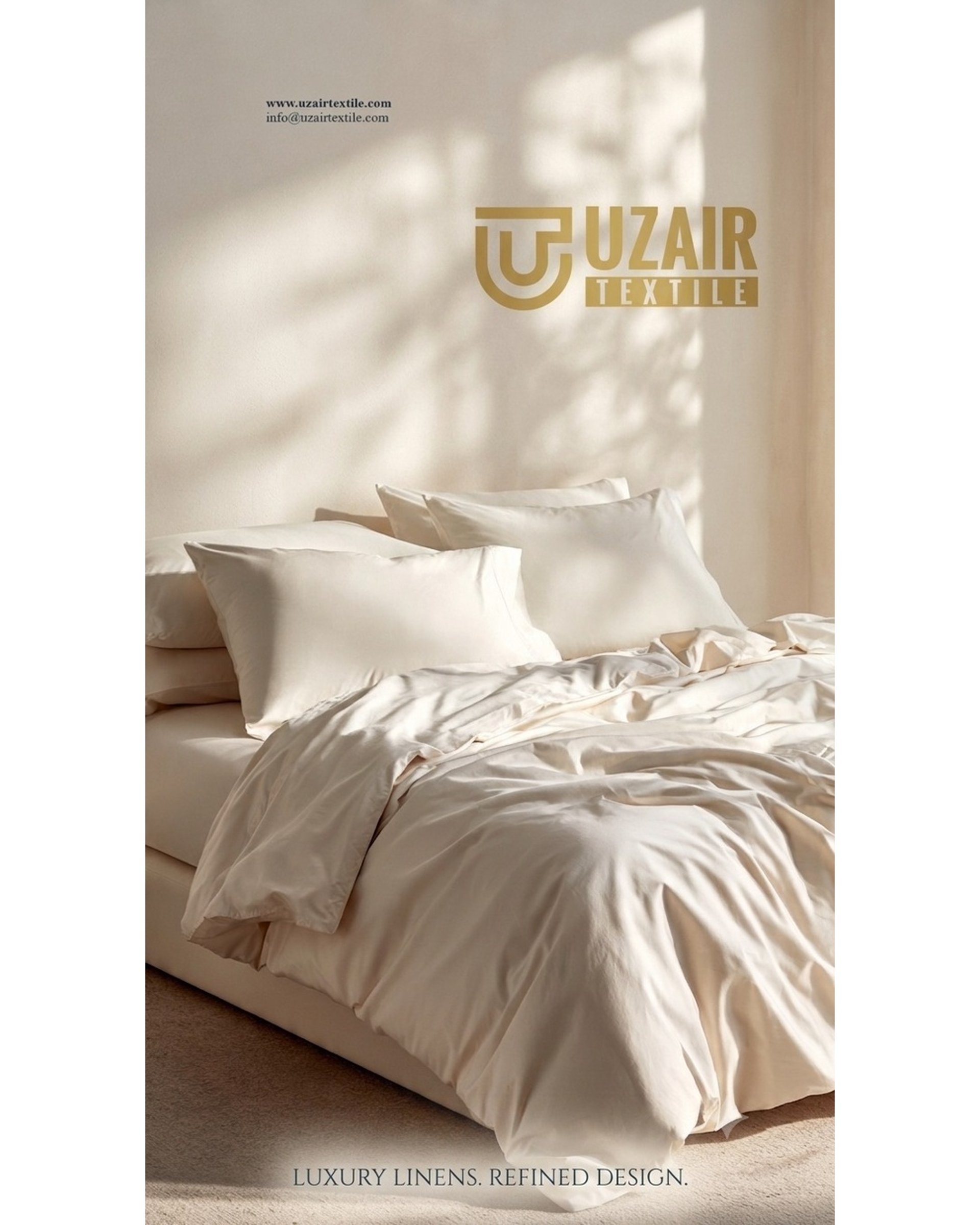
Percale vs. Sateen: Which weave do hotels prefer?
Many high-volume chains use a blend of cotton and high-grade polyester. The polyester dramatically increases tensile strength, reduces wrinkles out of the dryer, reduces drying time, and lowers the weight/GSM (Grams per Square Meter) cost, while the cotton surface keeps it breathable.
Uzair Textile Quality Lab
6/20/20265 min read
1. Percale vs. Sateen: The Weave That Defines the Feel
Walk into a luxury hotel, and you will find Percale on the bed. Walk into a retail store, and you will see Sateen on the display. There is a reason for this split.
Percale is a one-over-one-under weave. It is matte, crisp, breathable, and cool to the touch. It has that "snap" that makes hospital corners look sharp. Most importantly for hotels, it stands up to heavy use and irons out perfectly on industrial flatwork equipment. It looks freshly pressed even after a guest has been lounging on it all day.
Sateen is a three-over-one-under weave. It exposes more yarn on the surface, giving it that silky, glossy drape. It feels softer initially, but it snags easily, traps body heat, and wrinkles the moment you move.
For operational efficiency, t300 percale is the global sweet spot for 4- and 5-star properties. That means 300 threads per square inch using 40s to 60s single-ply combed cotton. It is substantial enough to feel luxurious, yet light enough to launder economically. Economy properties often use t200 percale—it dries faster and costs less upfront, but it shows signs of wear much sooner.
Have you ever slipped into a hotel bed and thought, Why doesn’t my bed feel like this?
It’s not magic, and it’s not just about buying the most expensive set on the shelf. The difference lies in a carefully engineered system—a mix of textile science, industrial laundering, and smart purchasing decisions that most of us never see.
Whether you are a hotelier looking to upgrade your guest experience, an interior designer sourcing for a boutique project, or just a homeowner desperate to capture that resort feeling, here is the real breakdown of what makes premium hotel bedding so irresistibly comfortable.
2. It All Starts with the Yarn: Why Fiber Quality Beats Thread Count
Let’s clear up the biggest myth right away: Thread count is not the holy grail.
In the hospitality world, conversations start with fiber, not numbers. The best luxury hotels don't use regular cotton. They specify long-staple or extra-long-staple cottons like Egyptian Giza, Supima, or Pima.
Why does the staple (the length of the individual fiber) matter so much? Because longer fibers create smoother yarns. There are fewer fuzzy ends sticking out, which means the fabric reflects light beautifully and resists pilling. That subtle, expensive sheen you see on a crisp white hotel sheet isn't a chemical coating—it is the result of combing out the short, rough fibers and mercerizing the yarn.
If you are looking at wholesale supplier catalogs, you will notice they rarely brag about numbers over 600. Instead, they focus on single-ply yarns (usually 40s to 60s). This is where the legendary "hotel percale" hand-feel comes from.
While some economy properties use a cotton-poly blend (usually a 60/40 ratio) to maximize durability against industrial washing, the true five-star experience is 100% combed cotton. Blends last longer (up to 250 wash cycles) and cut costs, but they sleep hotter and lack that crisp, cool signature that guests photograph and rave about. Pure cotton percale may only last 120–150 cycles, but the guest satisfaction it brings makes it worth every penny.
The Takeaway: Look for long-staple and single-ply over a sky-high thread count. This is the bedrock of the "best thread count for hotel sheets" debate.
What About "Wrinkle-Resistant"?
Modern hotels are moving away from heavy chemical treatments. Instead, they use mechanical calendering—a process where the fabric is passed through heated rollers after mercerizing. This compresses the weave, creating that signature smooth, cool surface. The white is just as engineered as the weave; optical brighteners and vat dyes are used to maintain a pure, bright white that signals "clean" to the guest.
The Takeaway: For that breathable, cool, and crisp feel that lasts all night, choose Percale. Save Sateen for a drape or throw, not for your main sheets.
3. The Industrial Laundry Effect: Why Your Sheets Don't Look Like the Hotel's
Here is the harsh truth: Even if you buy the exact same sheets from the hotel supplier, yours will not look like theirs after a month of home washing.
Why? Because you lack the industrial laundry.
Hotels wash sheets at 160–180°F using aggressive alkali breaks, chlorine bleach, and acid sour rinses that strip away all body oils, sweat, and stains. Then, they run them through 300°F+ flatwork ironers that essentially re-calender the fabric. This extreme heat resets the weave, removes micro-wrinkles, and gives the sheet that "hospital-corner" perfection. At home, your tumble dryer creates friction and fiber fatigue, leading to the rumpled look we all accept.
How Long Should Sheets Last?
A high-quality 100% cotton T300 percale is typically retired after 120–150 washes in a commercial setting. A poly-cotton blend can push 200–250 washes. Hotels track this meticulously because a gray, thinning, or pilled sheet hits review scores hard.
Sizing is another secret. Hotel flat sheets and duvets are cut 4–6 inches oversized to account for 2–3% shrinkage and to allow for deep, tucking hospital corners. This generous drape reads as abundance and luxury. Retail sheets are often cut to the absolute minimum to save on fabric costs.
4. How to Choose: Matching Specs to Your Needs
Whether you are sourcing for a 200-room property or refreshing your guest room at home, here is how to translate these specs into a purchase:
For Luxury & 5-Star Boutiques: Insist on 100% Combed Cotton Percale, T300, 40s–60s single-ply, with OEKO-TEX or GOTS certification. The higher upfront cost drives guest satisfaction and RevPAR.
For Midscale & High-Turnover: A Cotton-Poly Blend (55/45) or T200 percale is your friend. It dries faster, resists stains better, and takes the abuse of daily turnover without breaking the bank.
For Retail Shoppers (Home): Look for long-staple cotton, T300 percale, and single-ply yarns. Accept that you won't get the "industrial ironed" look at home, but you will get the feel. Wash in warm water, tumble dry low, and take them out slightly damp to reduce wrinkling.
A Note on Color & Consistency
Luxury suppliers rely on strict lab dips and Delta-E tolerances to ensure the white in Room 1201 matches the white in Room 3405. When you are ordering in bulk, always ask your commercial hospitality bed linen supplier for the full spec sheet: Tensile strength, tear strength, pilling rating, shrinkage percentage, and whiteness index. If they can't provide it, move on.
Final Verdict: The Three Pillars of a Premium Bed
The secret to "hotel bedding" isn't one thing. It is a triad of:
Fiber & Yarn: Long-staple cotton, combed, and single-ply.
Weave & Finish: Percale for crispness, calendered for smoothness.
Care & Replacement: Industrial heat, strict washing chemistry, and timely retirement of tired linen.
When these three align, you get the "magic" that makes a guest sleep deeper and a homeowner feel like they are on vacation.
Now that you know the science, the next time you look at a linen supplier, you won't be fooled by an inflated thread count. You will ask the right questions—and get the right bed.
To learn more about this we have visualize this article at Youtube. link is given below

Our Mission
Exceptional textile products at competitive prices, designed to meet your unique needs with unmatched quality and reliability. Our commitment to excellence ensures every piece reflects superior craftsmanship and timeless appeal.
CONTACT
Email address info@uzairtextile.com
Phone Number +92 345 7778794
© 2004. All rights reserved.